UOD Empowers Urban Planning Professionals with Advanced Planning and Evaluation Tools
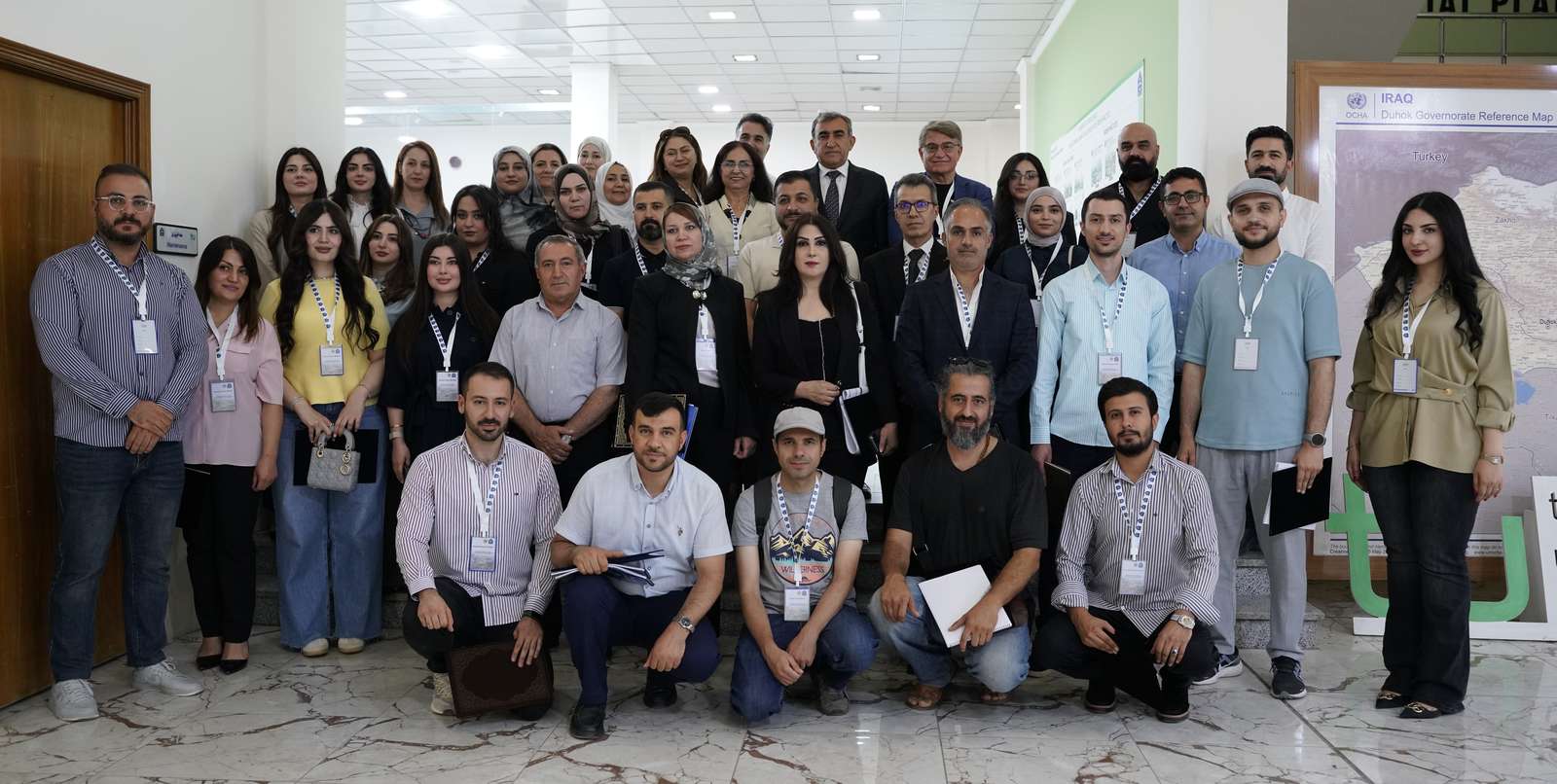
UOD – July 11, 2026 | University Press Office (UNPO) – Following the resounding success of the international seminar led by Dr. Karim Najar from Karlstads University (Sweden) on July 6, the Department of City Planning at the College of City and Regional Planning (CCRP), University of Duhok (UOD), has officially concluded its intensive Three-Day Technical Workshop. Running from Tuesday, July 7 to Thursday, July 9, 2026, at the Department of City Planning, the event successfully bridged the gap between global academic theory and local municipal practice.
The technical workshop, as a joint initiative started by Dr. Shareen Younus Ismael, the head of the Department of City Planning, and presented by the distinguished expert Dr. Karim Najar from Karlstads University brought together a targeted cohort of participants, including representatives from municipal and governmental directorates, academic faculty, regional planning experts, and postgraduate (MSc and PhD) research students. The three days were structured around specialized, hands-on toolkits and advanced evaluation frameworks designed to revolutionize how Kurdistan’s urban areas are analyzed, developed, and preserved.
Daily Technical Breakdown and Core Themes
Day 1: Urban Form and Neighborhood Evaluation Metrics
The workshop commenced with a deep dive into macroscopic urban analysis. Attendees were introduced to a Nordic-Inspired Neighborhood Evaluation Matrix. Participants learned to assess local urban environments across key indices, including Urban Form and Sustainability, Mobility and Accessibility, and Environmental Sustainability.
- The Methodology: Areas were graded using a precise rating scale from 1 (Very Poor) to 5 (Excellent).
- The Output: These indicators were synthesized into a weighted overall score and mapped dynamically onto radar charts, providing visual diagnostics of structural strengths and deficiencies in local neighborhoods.
Day 2: Housing Quality and the K-MAB Manual
Focusing on the residential scale, Day 2 debuted a tailored regional framework: the K-MAB Manual (Kurdish Model for Analysis of Residential Qualities).
- The Methodology: Using a specialized project evaluation matrix, participants evaluated the architectural and structural viability of local apartment complex designs and residential building projects.
- The Output: Projects were scrutinized on a strict 0 to 5 scoring matrix, establishing a standardized quality control protocol for future housing developments in the region.
Day 3: Citizen Engagement, Visual Preferences, and Public Spaces
The final day focused heavily on democratic urbanism and the human-centered approach. Attendees explored advanced methods for citizens and design professionals to co-create socially desirable built environments.
- Visual Preference Toolkits: Driven by Swedish participatory planning models, tools were introduced to capture community insights regarding architectural alignment and shared cultural memory based on visual design preferences.
- Micro-Zoning Public Spaces: The cohort was trained on specialized tools to map and evaluate specific functional micro-zones within urban public spaces, explicitly auditing moving zones, playing zones, parking zones, outdoor playing zones, and standing zones.
Empowering the Next Generation of Planners
Beyond its immediate value to municipal decision-makers, a core objective of the workshop was elevating local academic research. The advanced analytical matrices and evaluation frameworks introduced over the three-day period were specifically structured to serve as foundational research methodologies for undergraduate and postgraduate students, directly aiding MSc and PhD candidates in structuring data-driven thesis projects.
At the end of the workshop, in a specialized ceremony attended by Dr. Dawood Sulaiman Atrushi, President of the University of Duhok and Acting Dean of the College, certificates were awarded to the workshop participants. Dr. Kairm was also awarded an appreciation gift for dedicating his time and efforts to giving the workshop.
This landmark event underscores the University of Duhok’s strategic institutional commitment to fostering international academic collaboration, elevating the technical capabilities of local planners, and providing the precise data-driven tools necessary to build healthier, more resilient, and sustainable cities across the Kurdistan Region.
Advancing UOD’s Strategic Vision
The successful hosting of this international workshop strongly align with the University of Duhok’s Strategic Plan (2023–2038), emphasizing:
- Global Academic Collaboration & Internationalization: Fostering direct, high-level institutional exchange with leading European institutions, like Karlstad University (Sweden), to bring global best practices in urban sustainability and human-centered design to the Kurdistan Region.
- Public-Private-Academic Partnerships: Serving as a vital bridge between academia and the public sector by uniting university leadership, international scientific innovators, and key decision-makers from governmental directorates, engineering bodies, and NGOs to collaboratively refine regional planning policies.
- Elevating Postgraduate Research Excellence: Directly equipping MSc and PhD students with advanced urban research methodologies, evaluation frameworks, and over ten analytical matrices to structurally elevate the caliber and impact of their future thesis projects.
- Sustainable Community Development: Translating academic insights into practical municipal toolkits aimed at preserving cultural heritage, mitigating urban sprawl, and implementing climate-resilient standards to design healthier, better-functioning cities for future generations.
For more information on UOD’s strategic initiatives and academic collaborations, Visit UOD Highlights
CLICK HERE TO VIEW THE MEDIA COVERAGE FOR THIS EVENT
University Press Office – July 11, 2026
Reported by: Fatima Mahmood Ali, Aland Kamal Othman
Photography by: Mohammed A. Tahar, Ahmed Mustafa Hussein, Aland Kamal Othman
News Keywords
Sustainable Urban Planning
Human-Centered Design
Cultural Heritage
International Academic Collaboration
Urban Sprawl Mitigation