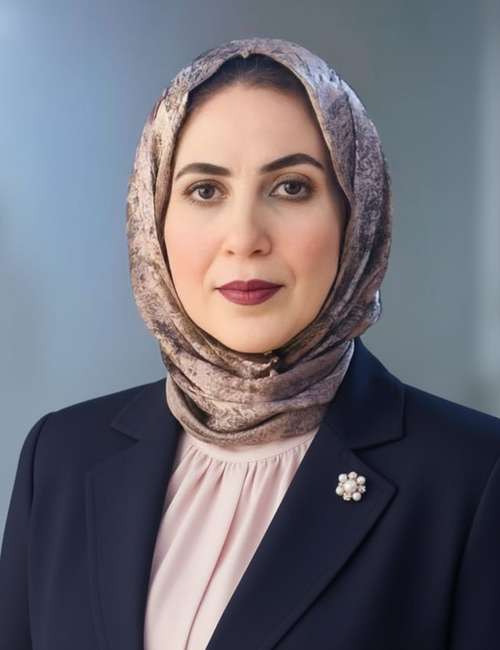
- PhD in Statistics of Nonparametric Functional Data Analysis, College of Science, University of Leicester, UK, 2019.
- MPHIL, Department of Mathematics, University of Leicester, UK. (General Statistics), 2015.
- MA in General Statistics, Department of Mathematics, Collage of Education, Duhok, University, 2007.
- BA Mathematics, College of Science, Duhok University, 2003.
- Ahmad, R. T., Ismaeel, S. S., & Omar, K. M. T. (2025). Testing normality for residuals in multivariate regression. General Letters in Mathematics, 15(3).
- Nader, M. N., Othman, S. A., & Omar, K. M. T. (2025). Modelling and reliability analysis of the two-parameter Lindley-binomial distribution. Statistics, Optimization & Information Computing, 14(3), 1110–1138.
- Hamid, G., & Taher, K. (2024). The influence of corporate social responsibility on consumer perception in Iraq. Tanmiyat Al-Rafidain, 43(141), 293–311.
- Ismaeel, S. S., Midi, H., & Omar, K. M. T. (2024). A remedial measure of multicollinearity in multiple linear regression in the presence of high leverage points. Sains Malaysiana, 53(4), 907–920.
- Othman, S. A., & Omar, K. M. (2024). An enhanced shrinkage function for denoising economic time series data using wavelet analysis. Science Journal of University of Zakho, 12(1), 138–143.
- Aldoski, G. (2023). Accounting for brand value: The case of Chinese listed companies in WPP and Interbrand's top 50 most valuable Chinese brands in 2013 report. Tanmiyat Al-Rafidain, 42(138), 221–238.
- Hamid, G. M., & Omar, K. M. T. (2023). Accounting for brand value: The case of Chinese listed companies in WPP and Interbrand’s top 50 most valuable Chinese brands in 2013 report. Journal of Tanmiyat Al-Rafidain (TANRA), 42(138), 221–238.
- Hamid, G. M., Mohammed, G. A., Omar, K. M. T., & Haji, S. M. R. (2023). Using Altman and Sherrod Z-score models to detect financial failure for the banks listed on the Iraqi Stock Exchange (ISE) between 2009–2013. International Journal of Professional Business Review, 8(4), 1–11.
- Hamid, G. M., Mohammed, G. A., Omar, K. M. T., & Haji, S. M. R. (2023). Consumers’ perception of corporate social responsibility in Iraq's Kurdistan Region. AJRSP, 5(50), 35–55.
- Ismaeela, S. S., & Omar, K. M. T. (2023). Detection of outlier in time series with application to Dohuk dam using the SCA statistical system. General Letters in Mathematics, 3.
- Omar, K. M. T. (2023). New alpha power inverse Weibull distribution with reliability application on the time spent waiting for assistance at two banks. Journal of Research Administration, 5(2), 5692–5706.
- Omar, K. M. T., & Othman, S. A. (2023). Comparative analysis of predictive performance in nonparametric functional regression: A case study of spectrometric fat content prediction. International Journal of Statistics in Medical Research, 12, 179–184.
- Othman, S. A. A., & Omar, K. M. T. (2023). Reliability analysis and statistical fitting for the transmuted Weibull model in R. Mathematical Statistician and Engineering Applications, 72(2), 161–177.
- Othman, S. A., Jameel, H. H., Omar, K. M. T., & Abdulazeez, S. T. (2023). An efficient nonparametric multivariate functional regression with conditional expectation. Journal of Applied Probability & Statistics, 18(3).
- Hamid, G. M., Omar, K. M. T., & Haji, S. M. R. (2022). Detecting financial failure using Sherrod model: Evidence from Iraqi Stock Exchange listed banks (2009–2015). International Journal of Academic Accounting, Finance & Management Research, 6(4), 9–15.
- Ismaeel, S. S., Omar, K. M. T., & Wang, B. (2022). K-nearest neighbor method with principal component analysis for functional nonparametric regression. Baghdad Science Journal, 19(6), 15.
- Omar, K. M. T. (2019). Nonparametric methods for functional regression with multiple responses [Doctoral dissertation, University of Leicester]. Leicester Research Archive. http://hdl.handle.net/2381/44723
- Omar, K. M. T., & Wang, B. (2019). Nonparametric regression method with functional covariates and multivariate response. Communications in Statistics—Theory and Methods, 48(2), 368–380.
- Omar, K. M. T., Othman, S. A., Abdulsalam, S., & Ismaeel, S. S. (2014). Significant factors to affect the blood pressure. International Journal of Advances in Engineering & Technology, 7(2), 327.
My research interests lie in the fields of General Statistics and Functional Data Analysis (FDA). I am interested in statistical theory and modern data analysis methods, including regression modeling, multivariate analysis, Bayesian inference, and computational statistics, with emphasis on developing reliable and efficient methodologies for complex data. My research interests lie in the fields of General Statistics and Functional Data Analysis (FDA). I am interested in statistical theory and modern data analysis methods, including regression modeling, multivariate analysis, Bayesian inference, and computational statistics, with emphasis on developing reliable and efficient methodologies for complex data.
My research interests lie in the fields of General Statistics and Functional Data Analysis (FDA). I am interested in statistical theory and modern data analysis methods, including regression modeling, multivariate analysis, Bayesian inference, and computational statistics, with emphasis on developing reliable and efficient methodologies for complex data. My research interests lie in the fields of General Statistics and Functional Data Analysis (FDA). I am interested in statistical theory and modern data analysis methods, including regression modeling, multivariate analysis, Bayesian inference, and computational statistics, with emphasis on developing reliable and efficient methodologies for complex data.
A major focus of my research is Functional Data Analysis, where data are represented as continuous functions such as curves or time-dependent processes. My work in this area includes functional principal component analysis (FPCA), functional regression models, classification, clustering, and dimension reduction techniques for high-dimensional functional data. I am also interested in the theoretical and computational aspects of FDA and its integration with modern machine learning approaches.
In addition to theoretical research, I am motivated by practical applications of statistical and functional data methods in areas such as biomedical sciences, environmental studies, economics, and engineering. My goal is to contribute to the development of statistically rigorous methods that address real-world scientific problems.
With over two decades of dedicated service in higher education, my academic career reflects a sustained commitment to teaching mathematics and statistics across several institutions in Kurdistan, Iraq, and the United Kingdom. With over two decades of dedicated service in higher education, my academic career reflects a sustained commitment to teaching mathematics and statistics across several institutions in Kurdistan, Iraq, and the United Kingdom. With over two decades of dedicated service in higher education, my academic career reflects a sustained commitment to teaching mathematics and statistics across several institutions in Kurdistan, Iraq, and the United Kingdom. With over two decades of dedicated service in higher education, my academic career reflects a sustained commitment to teaching mathematics and statistics across several institutions in Kurdistan, Iraq, and the United Kingdom.
My teaching career began in 2004 as an Assistant Researcher at the University of Duhok, where I developed foundational academic and research experience before progressing to full lecturing positions. Since 2010, I have served as a Lecturer at the University of Zakho, College of Education, while also contributing to the University of Duhok since 2007. Internationally, I contributed to teaching and academic activities at the University of Leicester, United Kingdom, during 2017–2018. I also taught at the American University of Kurdistan during the 2020–2021 academic year, where I delivered several Statistics courses across three consecutive semesters.
My teaching experience covers both undergraduate and postgraduate programs. At the undergraduate level, I have taught a wide range of courses including Statistics, Biostatistics, Calculus, Linear Algebra, Differential Equations, Graph Theory, and Eco-Statistics. At the postgraduate level, I have delivered advanced courses in Mathematical Statistics, Nonparametric Regression, and Hypothesis Testing and Parameter Estimation, reflecting my specialization in statistical theory and methodology.
In addition to teaching, I have actively contributed to academic administration and curriculum development by serving as a course coordinator for several core subjects, including Mathematical Analysis, Numerical Analysis, Abstract Algebra, Statistics, and Calculus. These responsibilities reflect my broader commitment to academic quality assurance and departmental development.
Since 2007, the author has been engaged in academic supervision within the field of Mathematics, with primary responsibility for guiding fourth-year undergraduate students through their graduation projects. This role encompasses topic selection, research design, literature review, application of mathematical methods, and scientific writing, with an emphasis on fostering analytical reasoning, methodological rigor, and academic integrity.
Since 2024, these supervision activities have extended to the postgraduate level, with the author currently supervising a Master’s candidate in Applied Statistics. This advanced supervisory role involves directing research in statistical methodologies, data analysis, and the application of modern statistical software, with the aim of producing thesis work that meets international academic standards.
These supervisory commitments reflect a sustained dedication to research excellence and the intellectual development of the next generation of scholars in Mathematics and Applied Statistics.
Between 2016 and 2022, academic and professional activities focused on interdisciplinary engagement in mathematics, engineering sciences, digital education, and research development through participation in international conferences, workshops, and online training programs.
International Conferences and Academic Participation
Academic participation included several international conferences and specialized workshops in mathematics, computational sciences, and engineering. Early activities included attendance at the workshop “Hilbert’s Sixth Problem” at the University of Leicester (2016), which explored the relationship between mathematics and physics.
Further engagement in computational and applied sciences was demonstrated through participation in:
- The 6th International Conference on Computational Mathematics and Engineering Sciences
- The Third International Conference of Mathematics and its Applications (TICMA 2022)
- The 4th International Conference on Advanced Science and Engineering
In parallel, participation in programs related to Kurdish and Middle Eastern studies at the University of Leicester reflected broader interdisciplinary academic interests.
Professional Development and Online Training
During the COVID-19 pandemic period in 2020, extensive participation in online workshops and training programs supported continuous academic development and adaptation to digital learning environments.
These activities covered several areas, including:
- Digital learning platforms and online teaching methods,
- Research methodology and academic publishing,
- STEM and applied sciences,
- Public health and sports sciences,
- Institutional ethics and risk management.
Training programs also focused on the use of educational technologies such as Google Forms, G-Suite, Edmodo, Camtasia Studio, and Microsoft Excel for online teaching, assessment, and data management.
Research and Academic Skills Development
Additional workshops addressed research quality, Scopus-indexed publication strategies, academic writing, and keyword optimization. These activities contributed to strengthening research dissemination skills and aligning academic work with international publication standards.
This academic trajectory reflects sustained engagement in mathematics, engineering sciences, digital education, and interdisciplinary professional development. Through participation in international conferences and training programs, continuous commitment has been demonstrated toward research advancement, academic collaboration, and modern educational practices.