UOD Strengthens Internationalization Efforts through Specialized Three-Day Training Program under RISE Project
UOD, May 7 2026 | University Press Office (UNPO)
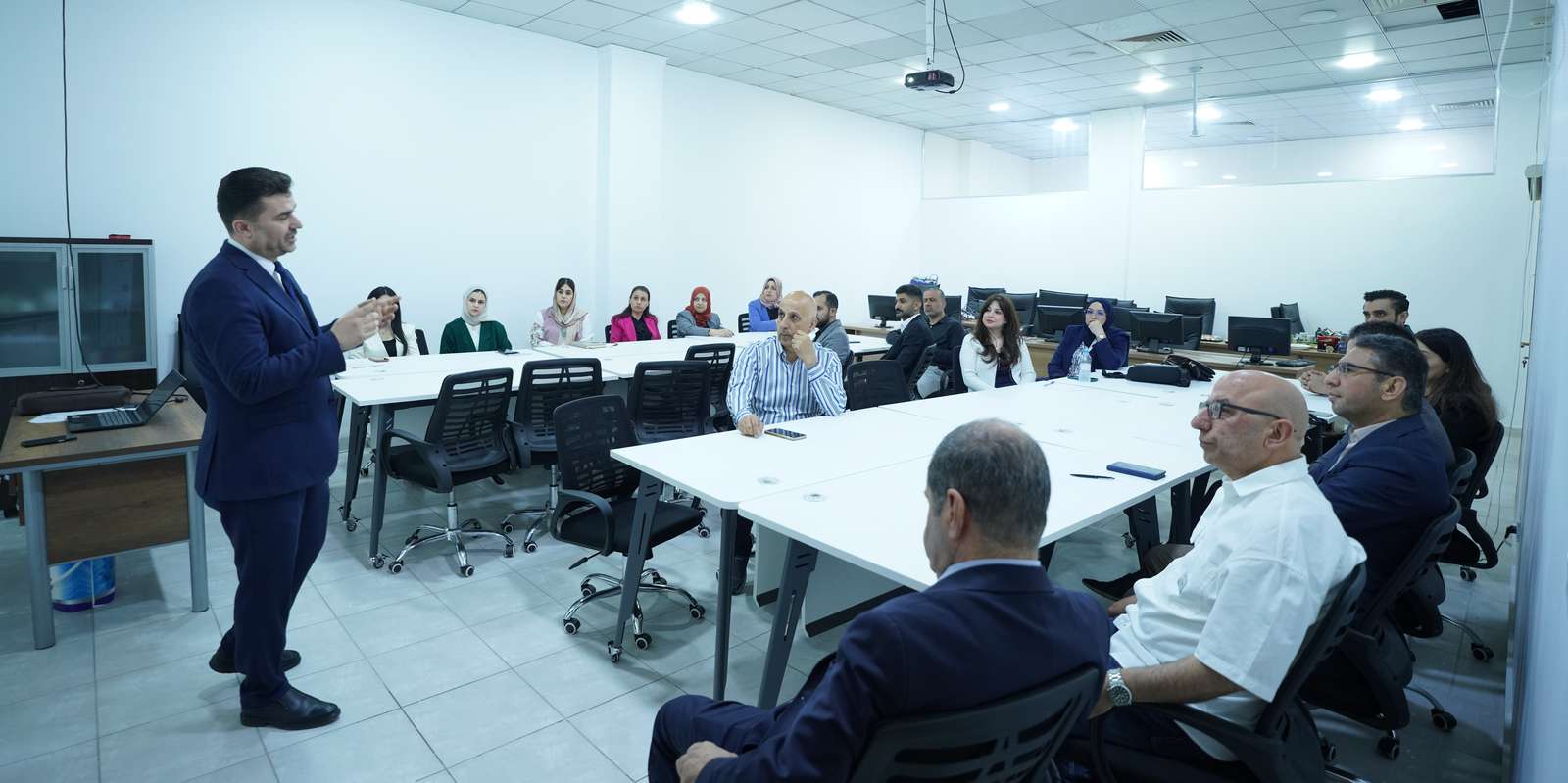
As part of its strategic commitment to advancing internationalization, academic mobility, and research development, and within the framework of the RISE Project, the University of Duhok (UOD), through the Directorate of International Relations (DOIR) and the Career Development Center (CDC), organized a specialized three-day training program for International Relations (IR) representatives across UOD colleges, alongside representatives of the Career Development Center (CDC), in collaboration with the main coordinator of the RISE Project, UNIMED - Mediterranean Universities Union, and partner institutions including International University of Rome (UNINT) and University of Murcia. The program also witnessed active participation from undergraduate (BA), postgraduate (MA), and doctoral (PhD) students.
Enhancing Internationalization Capacity Across the University
The training program was conducted under the supervision of:
- Dr. Nazar Ameen Mohammed, Director of the Directorate of International Relations (DOIR)
- Dr. Ahmed Khairadeen Ali, Director of the Career Development Center (CDC)
The initiative aimed to strengthen institutional capacity and enhance awareness of internationalization strategies within academic and administrative structures at UOD.
Day One: Mobility under Erasmus+ Key Action 171
By: Dr. Nazar Ameen Mohammed
The first day of the workshop, titled “Mobility under Erasmus+ KA171: A Practical Workshop for UOD Staff,” opened with remarks by Dr. Lokman Hadi Hassan, Vice President for Scientific Affairs and Postgraduate Studies, who emphasized the importance of international mobility and strategic global engagement for university staff and students.
The session provided a comprehensive overview of the Erasmus+ Programme (2021–2027), particularly Key Action 171 (International Credit Mobility – ICM), which supports mobility opportunities between European universities and partner countries, including Iraq.
The workshop highlighted the main types of mobility available under Key Action 171, including:
- SMS: Student mobility for studies (2–12 months)
- SMT: Student mobility for traineeships (2–12 months)
- Short-term and long-term PhD mobility opportunities
- STA: Staff mobility for teaching (2–60 days)
- STT: Staff mobility for training (2–60 days)
The session also explained the major thematic priority areas of Erasmus+ and international mobility programs, including:
- Green Deal and sustainability
- Digital transformation
- Governance, peace, and human development
- Sustainable growth and employment
- Renewable energy and climate change
- Human rights and future-oriented curricula
- Alignment with the United Nations Sustainable Development Goals (SDGs)
Special attention was given to explaining how universities and individuals can apply for mobility opportunities under KA171. The application process includes:
- Identifying partner universities
- Developing draft proposals or concept notes
- Signing inter-institutional agreements
- Preparing required documents and mobility plans
- Submission of applications by partner universities in programme countries
- Implementation, monitoring, and reporting of mobility activities
Day Two: Internationalization at Home
By: Dr. Tara Ihsan Abdullah
The second day addressed the concept of Internationalization at Home, emphasizing how universities can integrate global and intercultural dimensions into teaching, learning, and campus life without requiring physical mobility. Discussions highlighted:
- Inclusive learning environments
- Intercultural competencies
- Internationalized curricula
- Global engagement within local academic contexts
Day Three: Internationalization of Research
By: Dr. Rezgar Mostafa Mohammed
The final day focused on the internationalization of scientific research, emphasizing how universities connect with societies through applied research and knowledge transfer. The workshop highlighted the following:
- Knowledge transfer as a third mission of universities
- Regional and international research collaboration
- Joint publications and academic networking
- Research visibility and citation impact
- Strategies to increase UOD’s participation in international research initiatives and grants
The session also explored international models of connecting universities with society through applied research, highlighting how research can move from academic production to societal impact through collaboration with industry, innovation ecosystems, and technology transfer mechanisms.
Supporting UOD’s Strategic Vision
The training reflects UOD’s broader strategic priorities to:
- Expand international academic partnerships and cooperation
- Enhance student and staff global competencies
- Strengthen research collaboration and innovation
- Advance sustainable and globally connected education systems
Upcoming CDC-Based Training Program
As a continuation of these efforts, a second specialized training program organized by the Career Development Center (CDC) will take place on May 12, 13, and 14, 2026, targeting DOIR and CDC representatives across UOD colleges. The upcoming sessions will further support professional development and institutional coordination in the areas of career readiness, international engagement, and student support services.
CLICK HERE TO VIEW THE MEDIA COVERAGE
University Press Office (UNPO), May 7, 2026
Reported by: Fatima Mahmood Ali
Photography by: Mohammed A. Tahar
The News Keywords:
University of Duhok internationalization, RISE project UOD, Erasmus+ KA171 training Iraq, DOIR UOD workshop, internationalization of higher education Kurdistan