UOD Commemorates Barzani Genocide with High-Level Panel: From Memory to Justice
Scholars, Officials, and Experts Explore Political, Legal, and Social Dimensions of One of the Region’s Deepest Tragedies
UOD, August 2, 2025, University Press Office (UNPO) | To mark the anniversary of one of the most harrowing crimes committed against the Kurdish people, the University of Duhok (UOD) organized a panel discussion titled “Barzani Genocide: From Commemoration to Justice”. The event was led by the College of Political Sciences in collaboration with the University's Genocide Studies Center, drawing a wide spectrum of academics, political leaders and historians.
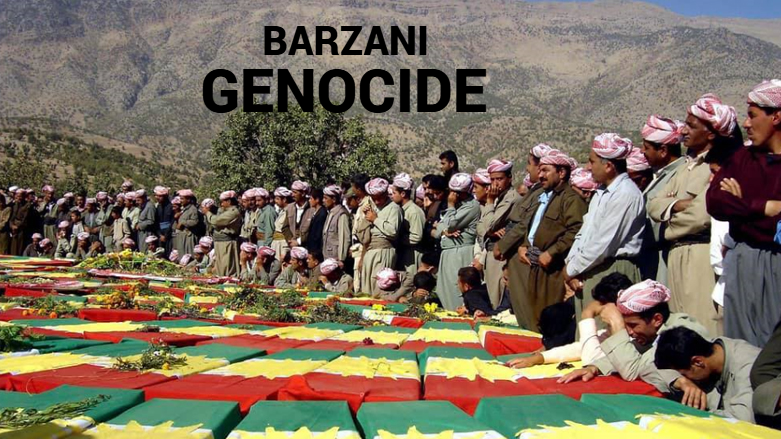
The panel highlighted the importance of documenting genocide, preserving historical memory, and pushing for both national and international recognition of crimes against the Kurdish population—particularly the 1983 Barzani Genocide, in which more than 8,000 Barzanis were forcibly disappeared by the former Iraqi regime.
Official Presence and Institutional Commitment
The event opened with remarks by UOD President Dr. Dawood Sulaiman Atrushi, who was joined by Ms. Vian Sulaiman, Deputy Chair of the KDP’s Organizational Bureau in Duhok, MP Bahjat Ali Spindari from the Kurdistan Parliament, and members of the University Council. Their presence underscored the University’s commitment to advancing dialogue on transitional justice, cultural memory, and the role of academia in shaping national consciousness.
Expert Contributions and Thematic Focus
The panel featured insights from prominent scholars at the University of Duhok:
- Dr. Hawar Khalil Taher, Dean of the College of Political Sciences, discussed the political motives behind the Barzani genocide, particularly in the context of rising Kurdish resistance and the 1979 Islamic Revolution in Iran. He also noted the lack of academic focus on genocide studies across Kurdish universities and urged deeper integration of this topic in research and curricula.
- Dr. Omed Mohamad Taher , Director of University Convention Center, and legal expert in genocide studies, reviewed the legal proceedings surrounding the genocide, including its classification as a war crime by the Iraqi High Criminal Court. He emphasized ongoing challenges in securing full legal recognition and accountability, especially compared to the later Anfal Campaign of 1988.
- Dr. Samya Saeed Khalid, sociologist, examined the long-term societal impact of the genocide on Kurdish families. She described how the targeting of men in the Barzani genocide and women in the Sinjar massacre represents a systematic attempt to destroy Kurdish social structures and family stability.
- Dr. Farhad Mohammed Ahmed, expert in Kurdish history, provided a comparative perspective on global genocide cases, analyzed the international community’s silence during the 1980s, and discussed the policy failures of the Iraqi regime in confronting past crimes. He stressed the need for proactive cultural diplomacy by the Kurdistan Region to ensure global recognition.
UOD’s Leadership in Genocide Studies and Documentation
In his remarks, President Dr. Atrushi emphasized that the University of Duhok’s Genocide Studies Center plays a central role in documenting Kurdish historical tragedies. He announced that the University is preparing to publish eight books focused on the Anfal Campaign in the Bahdinan region, authored by UOD faculty members. These publications are part of the university’s broader strategy to integrate history, justice, and cultural identity into its academic mission.
Dialogue, Engagement, and Forward Vision
The session concluded with a discussion involving faculty, and attendees. Participants raised questions on legal accountability, psychological trauma, and educational responsibility in the face of genocide. The dialogue reinforced the panel’s central message: that commemoration alone is not enough—justice, education, and action must follow.
Historical Background: The Barzani Genocide
In 1983, under the Ba’athist regime, more than 8,000 men and boys from the Barzani tribe were arrested and forcibly disappeared. They were initially deported to camps in Qushtapa, Harir, and Diana, then transferred to remote desert areas in southern Iraq, such as Samawah, where mass graves have since been discovered. The campaign was not only aimed at destroying the Barzani community but also at breaking Kurdish leadership and the will of the Kurdish resistance movement.
Today, the genocide stands as a symbol of both injustice and resilience—one that continues to define the Kurdish struggle for recognition, dignity, and self-determination.
CLICK HERE TO VIEW THE MEDIA COVERAGE FOR THIS EVENT
University Press Office| August 2, 2025
Reported by: Ismat Mahmoud Mohammed & Bareen Mohammed Ahmed
Photography by: Ali Habib Habib
The News Keywords
- Barzani Genocide Panel Discussion
- University of Duhok Genocide Studies
- Kurdish Historical Memory
- Anfal Campaign Research
- Transitional Justice in Iraq