
Academic Staff

June 2, 2026, 12:59 a.m.
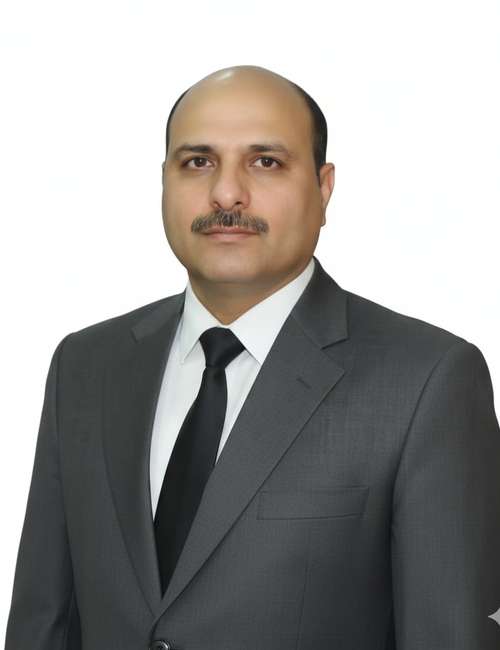
Samir Hassen Abass (Master)
None
Lecturer in Remote sensing

Mathematics
College of Basic Education
University of Duhok

MSc in Remote sensing, Computer Science, College of Science, Mosul University, 2002.

BSc in Mathematics, Computer branch, College of Education, Mosul University, 1998.

University teaching experience is a crucial pathway for building knowledge and developing scientific capabilities, particularly in the fields of computer science and mathematics. This experience began in 2003 at the College of Basic Education, University of Duhok, with the teaching of programming, which formed the basis for developing teaching methods based on understanding and analysis.

As experience grew, the experience expanded to include teaching computer skills at the College of Education, University of Duhok, alongside the continued teaching of programming. This diversity helped in understanding students' needs and adapting the educational content to their different levels.

The experience also extended to the College of Administration and Economics, enabling the connection of computer concepts with their practical applications. Furthermore, numerical analysis was taught in the Department of Mathematics for several years, which strengthened the integration of mathematical and applied aspects.

This journey continues at the College of Basic Education, with a focus on modern teaching strategies based on interaction and problem-solving. This experience highlights the role of the university professor as a mentor who contributes to developing students' critical and creative thinking and enhances the quality of the educational process.

Research

Research interests revolve around multiple fields that combine image processing, artificial intelligence, mathematical analysis, and computer applications. In the field of image fusion, research focuses on developing techniques that integrate information from multiple sources to produce higher-quality images and more accurate informational content, serving medical, industrial, and security applications.

In the field of face recognition, efforts are directed toward designing intelligent algorithms that rely on machine learning and image processing techniques to extract distinctive features and achieve high recognition accuracy, while taking into account the challenges of lighting and changing angles.

On the mathematical side, integrative-differential equations are a key research focus due to their role in modeling many physical and engineering phenomena. This includes studying numerical methods to find efficient and stable approximate solutions to these equations.

Attention also extends to MATLAB programming as a fundamental tool in numerical modeling and simulation, used to implement algorithms, analyze data, and test mathematical models related to various research fields. In general, these interests reflect an integrative approach that combines the theoretical and applied aspects, and aims to employ advanced computer technologies in addressing complex scientific problems and providing innovative solutions.

Supervising undergraduate research is a cornerstone of supporting the educational process and enhancing students' scientific research skills. Since 2004, our experience in supervising graduation projects in applied mathematics, computer science, and numerical analysis has been ongoing, contributing to building a solid scientific foundation for students and bridging the gap between theoretical knowledge and practical application.

Our supervision has focused on guiding students toward selecting contemporary research topics that align with labor market demands and scientific advancements, while also emphasizing the development of analytical thinking and problem-solving skills. Modern computer tools and technologies, such as numerical software and programming environments, have been employed to support project implementation and ensure accurate and applicable results.

This experience has contributed to preparing a generation of graduates with advanced research and applied skills, capable of pursuing postgraduate studies or entering the workforce effectively. This supervisory approach reflects an ongoing commitment to improving the quality of university education and fostering a culture of scientific research at the undergraduate level.