
Academic Staff
Architectural Engineering
College of Engineering
University of Duhok
- M.Sc., Theory of Architecture, College of Engineering, University of Sulaimani, Sulaimani, Iraq, 2021
- B.Sc., Architectural Engineering, College of Engineering, University of Duhok, Duhok, Iraq, 2010
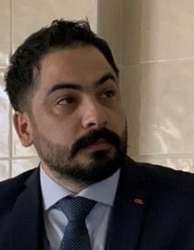
I am Ahmed Mohammed Ahmed, an architect, researcher, and Assistant Lecturer in the Department of Architecture at the University of Duhok, Iraq.
My academic background is in architectural theory, especially the philosophy of space, form, and meaning. My future ambition is to deepen that research and contribute to how architecture is thought and practiced, through teaching, writing, and design work.
My teaching philosophy is grounded in the belief that architecture is learned through the continuous integration of creative exploration and technical understanding. The Ancient Greeks described these complementary dimensions as episteme (knowledge) and techne (craft). In architectural education, these concepts are inseparable; meaningful design emerges through their interaction.
I aim to teach students not only architectural knowledge but also how to learn independently, develop critical thinking skills, and cultivate effective strategies for identifying and solving design problems. Rather than focusing solely on the final product, I encourage students to engage deeply with the design process, the iterative journey through which ideas are conceived, tested, refined, and transformed into architectural proposals.
Central to my teaching approach is the development of visual and spatial thinking. Drawing, hand sketching, and physical model-making remain essential tools for exploring and communicating ideas. I strongly value continuous skills training and the role of the “thinking hand” in fostering creativity, observation, and design intuition.
Because architecture is fundamentally a three-dimensional discipline, I help students develop the ability to conceptualize and represent spatial ideas through both two-dimensional and three-dimensional media. At the same time, I recognize that each student perceives form and space differently, and I strive to understand and support their individual ways of learning and designing.
Beyond formal and technical considerations, I encourage students to explore architecture as a human-centered and culturally embedded practice. I challenge them to move beyond conventional notions of form and to consider how architecture engages with identity, memory, psychology, time, experience, and the specific cultural contexts in which it exists. Through this approach, students develop not only design competence but also a deeper sensitivity to the human condition and the social responsibilities of the architectural profession.
Ultimately, my goal is to cultivate curious, reflective, and independent thinkers who possess both the creative imagination and technical expertise necessary for meaningful architectural practice and lifelong learning.