University of Duhok Hosts Landmark Conference on Legislative Inequality and Integration in Federal States
Joint International Conference Brings Together Legal Scholars from Across Iraq and Abroad to Tackle Federal Governance Challenges
📍 Duhok, Iraq – April 23–24, 2025 | University of Duhok Media
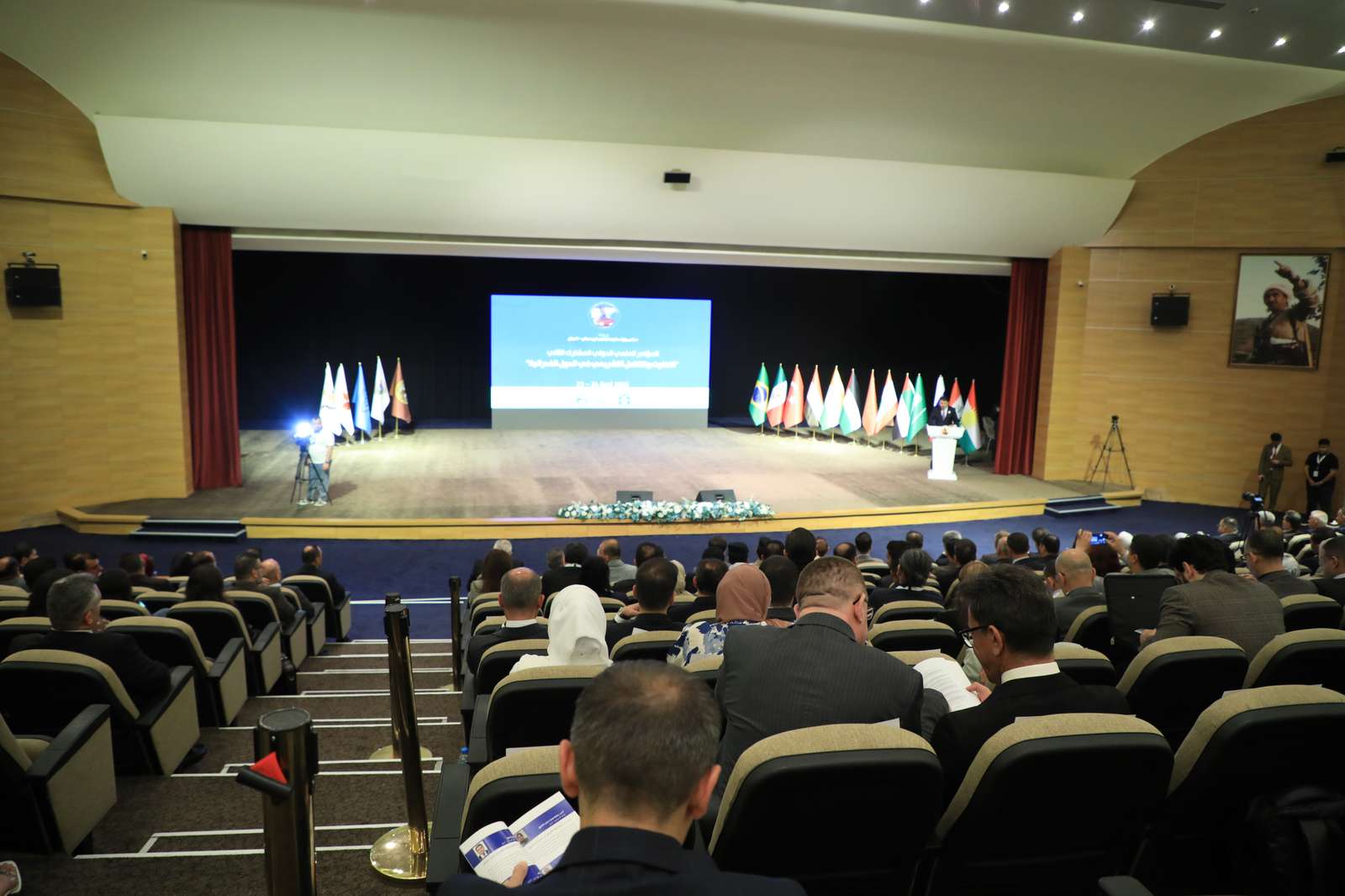
University Press Office (UNPO) | Under the auspices of the Presidency of the Diwan of Council of Ministers, KRG-Iraq, and overseen by his excellency, the Minister of Higher Education and Scientific Research,and as part of its strategic vision to foster academic leadership and international engagement, the University of Duhok (UOD) successfully hosted the Second International Scientific Joint Conference on Legislative Inequality and Integration in Federal States, held on April 23–24, 2025 at the UOD Convention Center.
The event was jointly organized by the Colleges of Law at the University of Duhok, Salahaddin University-Erbil, and University of Sulaimani, under the supervision of the deans of the colleges of Law at the 3 partner universities Dr. Aveen Khaled Abdurahman, Dr. Bakhtyar Sabir Bayz, and Dr. Dana Abdulkareem Saeed, in a row.This significant occasion was attended by governmental and political party representatives, university deans, professors and students,with the academic support and participation of 14 public and private Iraqi universities, as well as international legal experts and scholars.
🎓 Unifying Legal Thought for Federal Development
Held under the slogan “Effective Administration and Renewed Legislation for a Better Future,” the conference addressed pressing constitutional and legal challenges facing federal states, with a particular focus on Iraq’s complex legal landscape.
Key issues discussed included:
- The distribution of legislative powers between federal and regional authorities
- Legal harmonization across multi-layered governance structures
- Constitutional interpretation and federal dispute resolution
- Human rights, minority protection, and rule of law in federal frameworks
The opening ceremony featured speeches from:
- Dr. Dilshad Abduljabbar Haleem, Vice President of UOD for Administrative and Financial Affairs
- Dr. Sabah Ibrahim Wais, Advisor to the Minister of Higher Education and Scientific Research at the KRG
- Dr. Abdullah Fadhil Hamid, Deputy Dean of the College of Law at the UOD, Conference Preparatory Committee member
The opening ceremony included a folklore show showcasing the culture of Kurdistan.
🧑⚖️ Distinguished Participation from Iraq and Beyond
The conference welcomed over 150 participants, including deans of law colleges, professors, graduate researchers, legal experts, judges, and representatives of professional legal organizations.
Notably, international legal scholars from countries such as Lebanon, KSA, Morocco, Russia, Turkey, Brazil, Mexico, France, and India contributed to discussions on comparative legal systems and best practices in legislative reform.
🔹 Sessions were organized across 14 panels in 3 different halls, with over 54 research papers presented, representing a wide spectrum of academic perspectives on federalism, decentralization, legal pluralism, and integration policies.
Conference Themes: Addressing the Core of Legislative Complexity in Iraq
The conference sessions were thoughtfully structured around key thematic pillars that reflect the pressing challenges and opportunities within Iraq's evolving legal landscape. The discussions tackled a wide range of subjects, including:
- Legislative Duality and Federalism: Exploring the tension between federal and regional laws, and proposing legal harmonization mechanisms to bridge constitutional gaps.
- Constitutional Interpretation and Jurisdiction: Evaluating the powers of the Federal Supreme Court and the Kurdistan Region’s judiciary in interpreting overlapping legislative authority.
- Legal Mechanisms for Shared Governance: Reviewing models for distributing exclusive and concurrent powers among various levels of government.
- Oil and Natural Resource Legislation: Addressing legislative frameworks for equitable management and investment in oil and gas sectors across Iraq and the Kurdistan Region.
- Digital Transformation and Legal Infrastructure: Examining how digital governance can streamline public service delivery and support administrative law reforms.
Closing Ceremony: A Vision for Legal Reform and Academic Unity
The Scientific Joint Conference concluded with a prestigious closing ceremony held after showcasing the research papers. The ceremony was attended by Dr. Dawood Sulaiman Atrushi, President of the University of Duhok, and Dr. Farsat Ahmed Abdullah, Minister of Justice in the KRG, Dr. Mariwan Sabir, representative of the KRG, alongside deans, legal scholars, and representatives from participating universities and institutions.
In a moment that reflected the academic integrity and collaborative spirit of the conference, Dr. Shorash Hassan Omer, Chairman of the Scientific Committee and faculty member at the University of Sulaimani, delivered the official reading of the conference recommendations. These recommendations addressed key challenges and proposed solutions for legislative coordination between the federal and regional governments in Iraq, emphasizing the importance of constitutional clarity, legal harmonization, and the need for judicial independence within a federal framework.
Key Recommendations of the Conference:
- Unification of Personal Status Laws in Iraq
Through issuing a unified family law that addresses personal status issues, balancing family rights with cultural, ethnic, and religious diversity in society.
- Establishment of Constitutional Mechanisms for Lawmaking
Necessity to set clear constitutional foundations obliging Parliament to legislate within constitutional deadlines, especially in relation to federal laws.
- Unification of Penal Codes and Procedures
Need for harmonizing criminal laws and procedural codes between the Federal Government and the Kurdistan Region to reflect shared legal policies.
- Decoding Political Disputes in Iraq
Call for codifying political conflict resolution mechanisms among parties to better implement federalism, including the establishment of a Council of the Union and federal judiciary institutions.
- Reform of Oil and Gas Legislation
Enactment of specific legislation to regulate oil and gas investment, ensuring balanced economic development and environmental protection.
- Amending the Iraqi Constitution for Greater Regional Powers
Granting regions constitutional mechanisms to conclude international treaties in alignment with national sovereignty.
- Legislation to Address Legal Gaps in the Kurdistan Region
Enacting laws to address damages arising from invalidated legislation (e.g., Law 15 of 2008), especially after rulings by the Federal Supreme Court.
- Implementing Administrative Governance Standards
Applying unified governance standards when drafting legislation in both federal and regional institutions.
- Establishing an Independent National Arbitration Authority
Formation of a neutral body to resolve disputes between the federal and regional governments, in collaboration with international arbitration organizations.
- Clarifying Shared and Exclusive Powers
Emphasizing legal cooperation between the federal and regional governments when exercising joint powers and resolving constitutional conflicts.
- Balancing Rights and Freedoms
Recommending that the Kurdistan Parliament apply the "rationality principle" when implementing federal laws to ensure regional citizens retain their rights.
- Reforming Iraq’s Digital Governance Systems
Recommending the digitization of Iraq’s administrative and service frameworks, including national welfare, healthcare, and security databases.
🏆 Honors and Recognition
At the conclusion of the conference, shields of appreciation were awarded to:
- Guests, participating university deans and partners
And, certificates of appreciation were distributed to:
- Members of the scientific and preparatory committees
- Distinguished guest speakers
The ceremony closed with expressions of gratitude to all attendees, contributors, and organizers, highlighting the success of the event in building a strong academic platform for future legal dialogue and reforms.
A group photo was taken to commemorate the successful conclusion of this milestone academic gathering.
🤝 Strategic Collaboration and Academic Diplomacy
This high-impact conference directly aligns with the University of Duhok’s Strategic Plan 2023–2038, particularly in the areas of:
- Promoting legal research and comparative jurisprudence
- Enhancing the role of law faculties in policy development
- Encouraging postgraduate research and student engagement
- Strengthening ties between academia and governmental legal institutions
- Hosting international-standard academic events in Duhok
📌 UOD’s Role as a Legal Research Hub
This conference further cements the University of Duhok’s role as a national leader in academic dialogue, constitutional debate, and institutional capacity-building in the legal field—positioning UOD at the heart of Iraq’s legal reform and federal integration discourse.
📎 Access the full conference agenda and booklet Link
📸 View photo highlights from the event Day 1, Day 2
🔍 SEO Meta Keywords:
- University of Duhok Legal Conference
- Federalism and Legislative Inequality Iraq
- Law Colleges in Kurdistan and Iraq
- Academic Legal Reform Initiatives
- UOD Strategic Vision for Legal Research
UOD Media, April 14, 2025
📝 Reported by: Fatima Mahmood Ali
📸 Photography by:
- Ali Habib Habib
- Harman Jangeer Ahmed
- Hussein Isamael Mohammed
- Mohammed Abdulkareem Tahir