Preserving Iraq’s Cultural Heritage: UOD and IDS Launch Landmark Handbook
Review: The Handbook of Iraqi People’s Heritage – A Landmark Contribution to Cultural Preservation
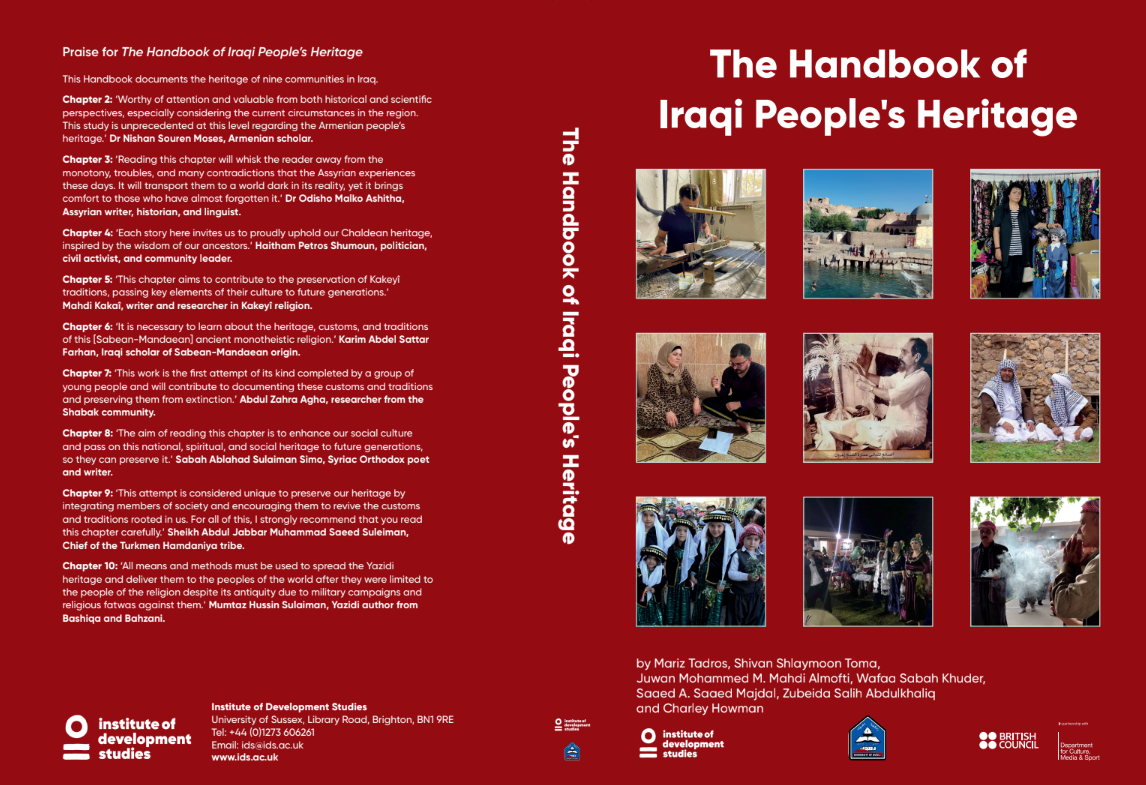
The University of Duhok (UOD), in collaboration with the Institute of Development Studies (IDS) at the University of Sussex, proudly presents The Handbook of Iraqi People’s Heritage—a seminal publication dedicated to documenting and preserving the rich, diverse, and often underrepresented cultural traditions of Iraq’s many communities. This comprehensive volume, meticulously crafted by a distinguished team of scholars, represents a milestone in heritage studies and stands as a testament to the university’s continuing commitment to safeguarding cultural diversity.
A Groundbreaking Initiative in Heritage Conservation
Iraq, as the cradle of civilization, is home to a rich mosaic of ethnic, linguistic, and religious groups, each with unique traditions that form an integral part of the country’s identity. However, the persistent challenges of conflict, displacement, and globalization have put many of these traditions at risk of being lost. The Handbook of Iraqi People’s Heritage emerges as a vital response to this crisis, capturing the voices, narratives, and lived experiences of Iraq’s minority communities—including the Armenians, Assyrians, Chaldeans, Kakeyîs, Sabean-Mandaeans, Shabak, Syriac Orthodox, Turkmen of Tal Afar, and Yezidis (Ezidi).
Unlike traditional heritage studies, which often focus on material culture, this handbook takes a multidimensional approach, encompassing oral traditions, religious customs, artistic expressions, and intergenerational knowledge. Through a blend of scholarly research and firsthand accounts, it provides an intimate and immersive exploration of Iraq’s intangible heritage.
A Collaborative Effort Rooted in Academic Excellence
The handbook is the result of a dynamic partnership between UOD and IDS, supported by the British Council’s Cultural Protection Fund and the Department for Digital, Culture, Media, and Sport (UK). Under the leadership of Professor Mariz Tadros, Director of the Middle East People’s Culture Conservation Collective, and Dr. Shivan Shlaymoon Toma from the University of Duhok, the project embodies an exemplary model of cross-institutional collaboration.
This initiative engaged young heritage gatherers—students and community members—who played a crucial role in collecting stories, documenting practices, and preserving historical narratives. By incorporating a community-driven research methodology, the handbook ensures that heritage is not merely studied from an academic lens but also honored and celebrated by those to whom it belongs.
An Interactive and Immersive Experience
One of the handbook’s defining features is its integration of multimedia elements. Complementing the printed and digital versions, an online edition includes videos, photographs, and audio recordings, allowing readers to engage deeply with the material. This innovative approach transforms the reading experience into an interactive journey, making the stories of Iraq’s diverse peoples come alive.
A Strategic Vision for Cultural Preservation
For UOD, this handbook is more than just a book—it is part of a broader academic and social mission. As noted in the foreword by UOD President Dr. Dawood Sulaiman Atrushi, the university is committed to promoting pluralism, fostering cultural awareness, and playing an active role in the protection of Iraq’s endangered heritage. This publication aligns with UOD’s strategic objectives to integrate cultural heritage studies into academic curricula, empower local communities, and contribute to global heritage discourse.
A Must-Read for Scholars, Students, and Cultural Enthusiasts
Whether you are a researcher in Middle Eastern studies, a student exploring Iraq’s cultural landscape, or an advocate for heritage conservation, The Handbook of Iraqi People’s Heritage is an indispensable resource. Its insightful analysis, combined with authentic voices and rigorous scholarship, makes it a cornerstone publication in the field of cultural studies.
Open Access for All
In alignment with the principles of knowledge-sharing and accessibility, the handbook is available as an Open Access publication, ensuring that readers worldwide can benefit from its content.
🔗 Click here to access the full PDF version: The Handbook of Iraqi People’s Heritage
The University of Duhok extends its deepest gratitude to all contributors, scholars, and institutions that made this project possible. Together, we are preserving the past, enriching the present, and safeguarding the future of Iraq’s diverse cultural heritage.
Ismat M. Mohammed
Directorate of Media and Public Relations (DOPR), University of Duhok