
Advancing Theoretical Chemistry: UOD Scholar Contributes to Study on Substituent Effects in Aromatic Compounds
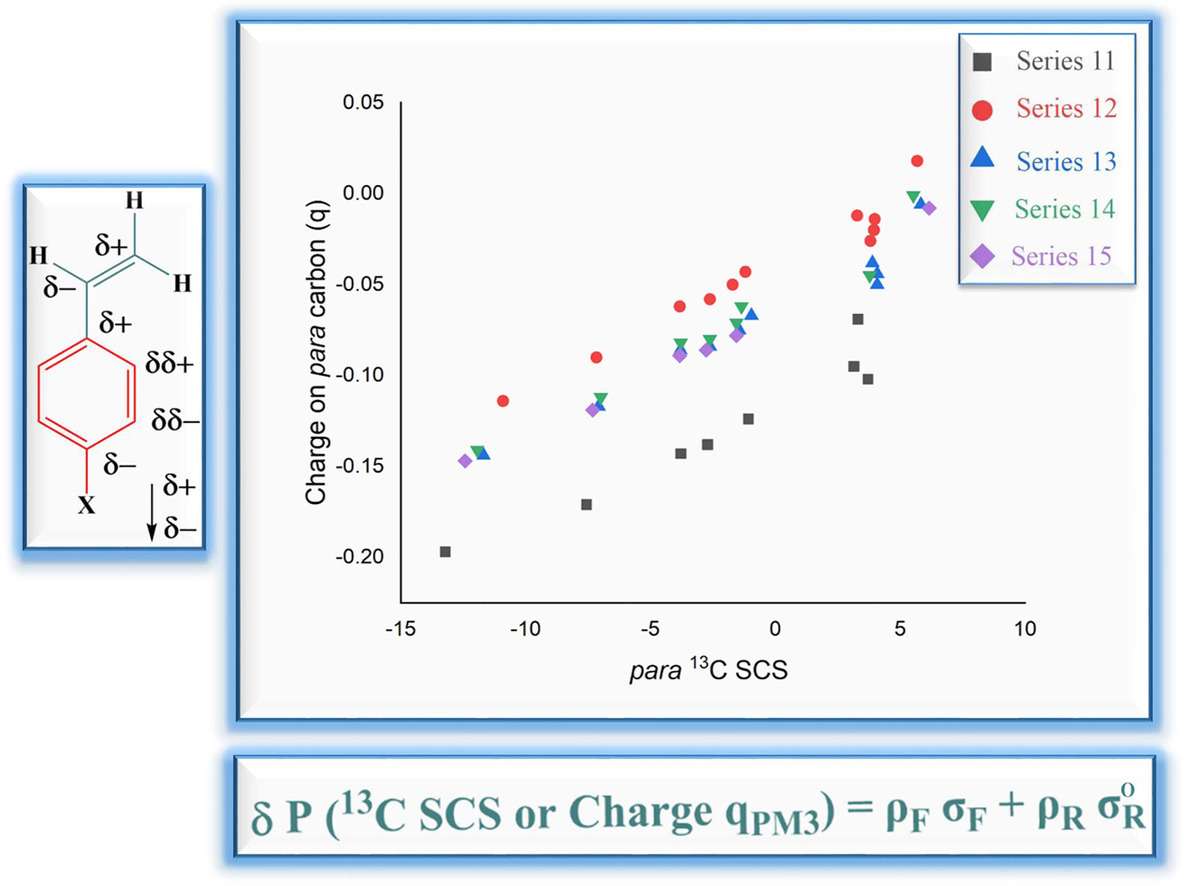
The University of Duhok (UOD) proudly highlights a recent scientific publication co-authored by Dr. Ghazwan F. Fadhil from the Department of Chemistry, College of Science. As the 3rd author in an international research collaboration, Dr. Fadhil contributed to a paper that deepens our understanding of substituent effects in aromatic molecules, which play a pivotal role in pharmaceutical chemistry, organic synthesis, and materials science.
📄 Title: “Transmission of Substituent Effects in Para-Disubstituted Benzenes: ^13C Chemical Shift and Mulliken Charge Modeling of Para Carbon Atoms via the Reynolds DSP Model”
📚 Published in: Journal of Molecular Structure (Results in Journal of Molecular Structure)
🗓 Volume: 1400 | Year: 2024
🔗 Read the full article: https://doi.org/10.1016/j.molstruc.2024.139991
—
🔍 Research Overview: Modeling Electronic Effects in Benzene Derivatives
This study combines computational and experimental techniques to explore how substituents influence electron distribution and carbon-13 (^13C) nuclear magnetic resonance (NMR) shifts in para-disubstituted benzenes. Specifically, the research investigates 17 series of substituted benzene molecules, analyzing:
- Mulliken charges derived from PM3 and DFT(B3LYP) calculations
- Experimental ^13C substituent chemical shifts (SCS) at para positions
- Correlations between electronic charge and ^13C SCS
- Substituent effects modeled using the Reynolds Dual Substituent Parameter (DSP) model
Key Results:
- Strong correlation between Mulliken charges and ^13C SCS, supporting the predictive power of electronic structure methods
- The DSP model, using field (σF) and resonance (σR) constants, successfully models both charge and ^13C SCS data
- Insights into π-polarization effects and extended conjugation through side chains
- Exceptions observed with highly electronegative substituents (e.g., nitro, azo groups), revealing reversed substituent behavior
—
🌍 International Collaboration & Impact
This study reflects a dynamic collaboration between computational and physical chemists from multiple institutions. Dr. Ghazwan F. Fadhil’s involvement underscores UOD’s active participation in frontier molecular modeling research and strengthens its global presence in theoretical and computational chemistry.
🗣 Dr. Fadhil commented:
“This research demonstrates how computational tools can uncover the nuanced ways substituents influence molecular behavior. The alignment of experimental NMR data with theoretical models has real applications in chemical design.”
—
🔬 Applications and Scientific Relevance
The insights from this study have implications in:
- Designing new pharmaceuticals with tailored electronic properties
- Understanding structure–activity relationships in aromatic compounds
- Enhancing the prediction of spectroscopic behavior of organic molecules
- Modeling reactivity and selectivity in electrophilic and nucleophilic substitutions
The findings align with UOD’s Strategic Plan 2023–2038, focusing on interdisciplinary research, scientific excellence, and fostering global scientific exchange.
—
🔍 SEO Keywords:
Substituent effects in benzene, 13C NMR modeling, Mulliken charge analysis, Reynolds DSP model, para-disubstituted benzenes, computational chemistry, University of Duhok research
—
🔗 Related Reading:
- Journal of Molecular Structure – Elsevier
- Mulliken Charge Theory and PM3 Method
- Reynolds Dual Substituent Parameter (DSP) Model
- DFT & π-Polarization Studies in Organic Chemistry
📍 UOD Media & Public Relations | March 2025
✍ Prepared by: [Your Name]